
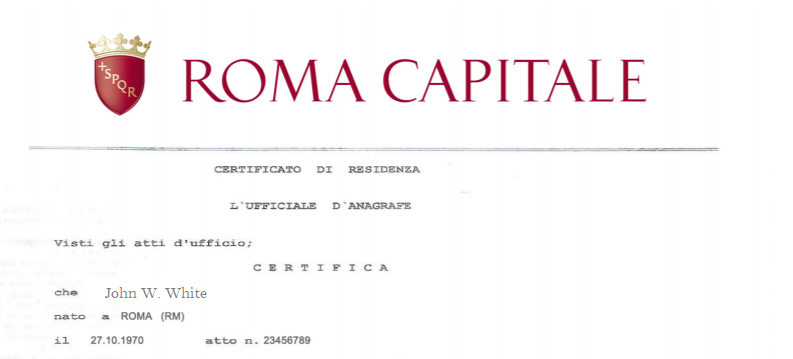
A residence by virtue of Art. 43 Para. 2 of the Italian Civil Code is the place where a person usually lives, has family, carries out a social life, and lives when not otherwise working away from home or occupying a second home. In short, a residence is a “home base” that is continuously returned to.
A domicile, on the other hand, is a place where a person has established their principal headquarters for business or other interests. There can also be multiple domiciles, as the business may have various headquarters. An example may be those candidates for citizenship who elect to have a domicile located near their Italian lawyer’s law firm, solely because one of their interests is obtaining citizenship.
But what risks are involved when declaring a residence other than your actual one? Reporting a false residence is a crime and those committing it are criminally liable. Crimes can range from forgery to inducing the forgery of a public official (a more serious offense).
There are numerous instances of criminal proceedings in which false residence declarations have been made expressly for the purpose of recognition of Italian citizenship by descent. In all these cases the interested party declared residence without meeting the above condition for requesting residency.
Practically speaking, the administrative process takes 6-12 months. If those seeking citizenship have left before the process is complete, their request is cancelled. If they have simply changed plans and returned to their home country before the completion of the administrative process, then no law has been broken. However, if someone falsifies documents or induces someone to falsify documents with the sole aim of establishing residence quickly (as part of the application process for citizenship) and leaves the country soon after, legal charges may be brought.
Read more articles on our website:
If you need any help, feel free to contact us:
+3906-9294-6085 (Global)